
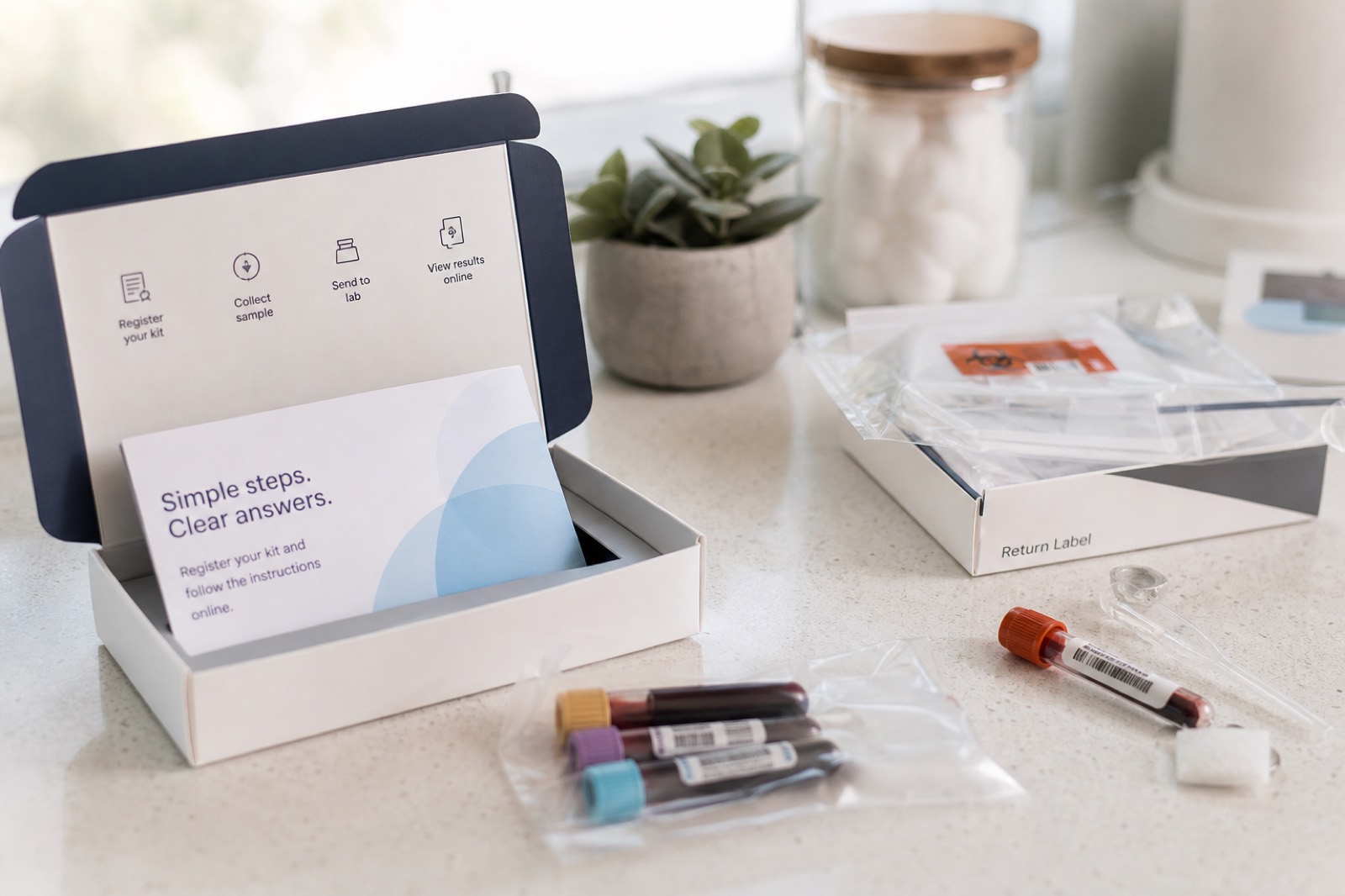

Routine & preventive
Complete blood count, comprehensive metabolic panel, lipid panel, and hemoglobin A1c when appropriate for screening or monitoring.
Access commonly ordered laboratory testing with clear self-pay options. Siya Health can help determine which tests may be appropriate and help interpret results when clinically relevant.
Available across California · Texas · Pennsylvania · Florida
Not sure which tests make sense? We’ll help.
Already have results? We’ll help interpret them too.
Browse available laboratory tests and current pricing. Storefront opens in a new tab after you confirm.
Labs can help clinicians evaluate patterns—not replace a thoughtful medical conversation.
Laboratory testing can support evaluation of fatigue, brain fog, metabolic health, thyroid function, blood sugar, nutritional status, cardiovascular risk markers, hormone-related concerns, and preventive screening. Symptoms often overlap, and the same complaint can have more than one contributor.
Results need context: your history, medications, exam findings when available, and how values change over time. A number outside—or inside—a reference range is a starting point for clinical interpretation, not a diagnosis by itself.
Examples of tests clinicians may consider—availability and panels vary on the storefront.
Complete blood count, comprehensive metabolic panel, lipid panel, and hemoglobin A1c when appropriate for screening or monitoring.
TSH, free T4, and additional thyroid testing when clinically indicated—not as a default explanation for every symptom.
Vitamin B12, vitamin D, ferritin, and iron studies when history suggests possible deficiency or related contributors to fatigue.
Hemoglobin A1c, fasting glucose when ordered, lipids, and liver or kidney markers that help frame metabolic risk and monitoring.
Testing guided by symptoms and history—often including thyroid, iron, and metabolic evaluation. A single hormone panel generally does not diagnose perimenopause.
Testosterone testing when clinically appropriate, plus CBC, metabolic markers, lipids, and other labs based on symptoms and risk—not a number in isolation.
Blood tests do not diagnose ADHD. Selected labs may sometimes help evaluate other contributors to fatigue, concentration problems, sleep disruption, or cognitive symptoms—such as thyroid abnormalities, anemia, iron or B12 deficiency, or metabolic issues—when a clinician judges testing appropriate.
Marker guides that explain what a test broadly measures — not a catalogue with delusions of grandeur. Parent frame: preventive care.
A complete blood count looks at cells that circulate in your blood. It is a common baseline test in preventive care—and a starting clue, not…
A comprehensive metabolic panel groups common chemistry markers that help clinicians look at kidney and liver context, electrolytes, and glu…
A lipid panel looks at cholesterol and related markers used in cardiovascular risk conversations. It informs prevention planning; it does no…
Hemoglobin A1c reflects average blood sugar over roughly the prior two to three months. It is a preventive and metabolic tool—not a complete…
TSH is a common first thyroid marker. It helps clinicians decide whether thyroid function deserves a closer look—it does not by itself expla…
Ferritin reflects iron stores. With related iron studies, it helps clinicians evaluate one common contributor to fatigue—especially when his…
Vitamin B12 testing looks at a nutrient that supports blood counts and neurologic function. It is most useful when history suggests risk—not…
25-hydroxy vitamin D is the usual blood marker for vitamin D status. It can matter for bone and general health conversations—but it is not a…
Short orientations. Each test still has its own page.
Fatigue and brain fog have many overlapping causes. Testing can look at some contributors when history suggests it may be useful. Labs do not diagnose burnout, depression, sleep apnea, or ADHD, and a normal panel does not prove nothing is wrong.
A focused first look often covers CBC ferritin TSH, and B12, with CMP vitamin D, or A1C when metabolic risk is part of the story.
Preventive labs establish baselines and watch cardiometabolic risk. The point is thoughtful screening, not ordering every available test. They do not replace history, blood pressure checks, or age-appropriate cancer screening.
See CBC , and .
Blood tests do not diagnose ADHD. Evaluation is clinical. Selected labs may look for other contributors to fatigue or concentration problems when a clinician judges that useful. Labs are not a substitute for an ADHD evaluation.
Those overlaps are the same markers as fatigue: , and sometimes .
Midlife symptoms often overlap: sleep, fatigue, brain fog, mood, and cycle changes. A hormone panel does not confirm or rule out perimenopause. Testing, when it is useful, usually starts with iron, thyroid, and metabolic markers.
See , and .
This starts with history, not a single hormone number. A single testosterone value does not explain symptoms or confirm a treatment plan. When testing is discussed, total and free testosterone sit with blood count, metabolic, and cardiovascular markers. PSA is only when age, history, and clinical judgment support it.
Related test pages: , and .
Four high-level steps—from browsing tests to discussing what comes next.
Review available tests online, or start with a clinical conversation if you are unsure what may be useful.
Follow the storefront workflow to complete testing through the laboratory network available for your order.
Results become available through the storefront’s result process. Numbers alone are not a care plan.
A Siya Health clinician can help interpret findings in context and discuss follow-up, further evaluation, or monitoring.
Some people know exactly which routine test they want. Others need help prioritizing.
If you already know a specific routine test you are seeking, you can browse current options and direct-pay pricing on the laboratory storefront.
When symptoms have many possible causes, ordering a large set of unrelated tests is not always useful. A clinician can help prioritize based on symptoms, history, medications, and risk factors.
Not sure which labs make sense?
Book Free Meet & GreetSee current availability and pricing on the storefront—without surprise-billing promises we cannot guarantee.
Browse current test availability and direct-pay pricing through Siya Health’s laboratory storefront. Prices and availability are shown there and may change. Insurance coverage is not guaranteed. Review storefront details before purchasing.
Prefer a primary-care loop? Start with preventive labs, then follow-up plans when ongoing care fits.
Laboratory values should not be interpreted in isolation.
For emergencies, call 911. The laboratory storefront is not for urgent or emergency care.
Read our calm guide: How to read your lab results — then book interpretation when you need it.
Jump to topic guides—then browse the storefront when you’re ready.
Not by itself. Labs can help evaluate contributors such as anemia, iron stores, thyroid function, vitamin levels, blood sugar, and metabolic markers. Fatigue often has overlapping causes, so results need clinical context—history, symptoms, medications, and sometimes additional evaluation.
No. Blood tests do not diagnose ADHD. Adult ADHD evaluation is clinical. Selected laboratory testing may sometimes help assess other medical contributors to fatigue, concentration problems, sleep disruption, or cognitive symptoms when a clinician judges it appropriate.
Thyroid testing can be reasonable when symptoms, history, or exam findings raise concern—but brain fog has many possible contributors. A clinician can help decide whether TSH and related tests are useful in your situation rather than assuming thyroid disease is the cause.
Depending on history, clinicians may consider tests such as a complete blood count, ferritin or iron studies, TSH, vitamin B12, vitamin D, metabolic markers, and hemoglobin A1c. The right panel depends on your symptoms and risk factors—not a one-size-fits-all checklist.
No. The storefront is designed for transparent direct-pay (self-pay) access. Insurance coverage is not guaranteed. Review current pricing and details on the storefront before purchasing.
Yes. When you are a Siya Health patient or book a visit, a licensed clinician can help put results in context with your symptoms, history, and medications, and discuss next steps when appropriate. Laboratory values should not be interpreted in isolation. An abnormal result does not automatically confirm disease; a normal result does not rule out every condition.
Generally no. Perimenopause is typically a clinical diagnosis based on age, menstrual pattern changes, and symptoms. Hormone panels alone usually should not be presented as confirming or ruling out perimenopause.
Sometimes—when symptoms and clinical history suggest it may be relevant. Testosterone results require clinical context, timing, and interpretation alongside other possible contributors to fatigue. A single number does not automatically explain symptoms or confirm a treatment plan.
Hemoglobin A1c is a blood test that reflects average blood sugar over roughly the prior two to three months. Clinicians use it to screen for or monitor diabetes and prediabetes risk. It is one marker among others and should be interpreted with clinical context.
Low vitamin B12 can contribute to fatigue, neurologic symptoms, mood or cognitive changes, and blood-count abnormalities in some people. Deficiency has multiple causes. Testing and interpretation should be guided by symptoms and clinical history—not used for self-diagnosis.
Ferritin reflects stored iron. Low ferritin can support evaluation of iron deficiency, which may relate to fatigue, brain fog, restless legs, or heavy menstrual bleeding in some patients. Ferritin can also rise with inflammation, so results need clinical interpretation.
No. Prices and availability are shown on the laboratory storefront and may change. Review the storefront for current direct-pay pricing before purchasing. Insurance coverage is not guaranteed.
Still not sure which tests make sense?
A short conversation can help prioritize next steps—without turning labs into a catalogue purchase.
Browse transparent direct-pay testing, or start with a clinical conversation if you are unsure what to order.
Medication costs are separate. Availability may vary by state. Book a free Meet & Greet to confirm eligibility.